


Enhanced Call Debugging with SIP Status Tracking
A customer spent three days debugging what they thought was a model issue. The agent kept "failing" on certain calls - no completion, users hanging up frustrated. They rewrote prompts. Tested different LLMs. Nothing helped.
Then we looked at the SIP logs. The calls were being terminated by the carrier before the agent even finished speaking. It wasn't a model problem. It was a telephony problem. Their SIP provider was timing out on responses over 4 seconds.
We added SIP status tracking after seeing this pattern too many times: teams blaming the model when the logs tell a different story.
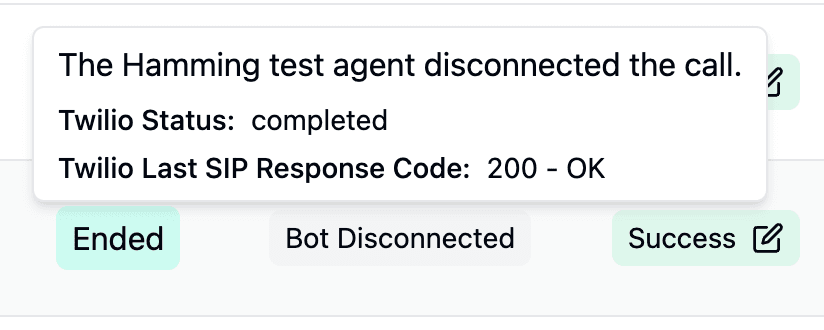
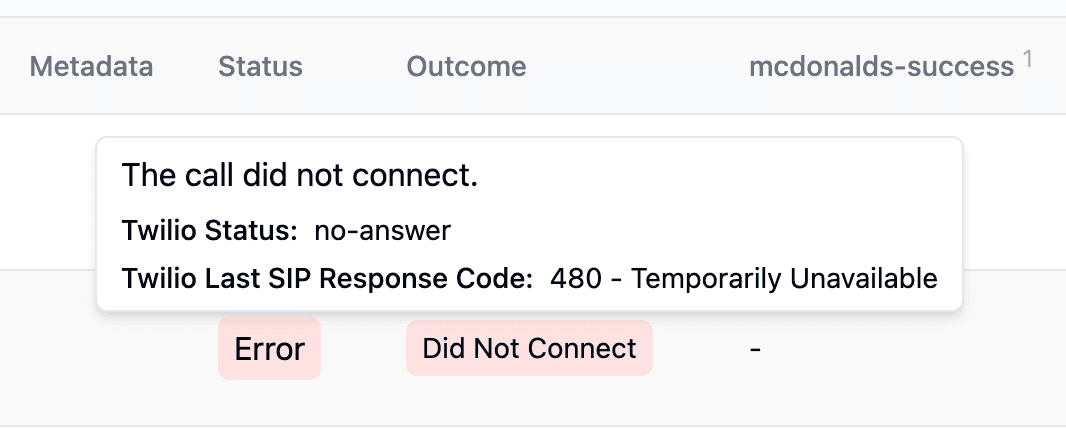
Quick filter: If you can’t tell whether the agent failed or the carrier dropped the call, you’re debugging blind.
What's New
- Call termination identification
- Real-time SIP status tracking
- Comprehensive session logging
- Detailed connection state monitoring
| Feature | What it shows | Why it matters |
|---|---|---|
| Call termination identification | Who ended the call and why | Speeds root-cause analysis |
| SIP status tracking | Protocol-level status codes in real time | Flags failures before users complain |
| Session logging | Full call event timelines | Replays exact failure points |
| Connection state monitoring | State changes across the call | Detects instability and drop-offs |
Why It Matters
Quick issue identification and resolution are crucial for maintaining efficient voice AI operations. With enhanced debugging capabilities, you can:
- Accelerate Troubleshooting: Immediately identify who ended calls and why
- Improve Reliability: Monitor SIP status and connection states in real-time
- Reduce Downtime: Quickly pinpoint and resolve communication issues
- Optimize Performance: Track and analyze call session metrics
These tools enable teams to maintain high-quality voice AI services while minimizing debugging time and effort.
We added this after too many incidents where teams blamed the model, but the SIP logs told a different story.
How to Use
To access the new debugging features:
- Navigate to your Hamming AI dashboard
- Select a voice agent
- Open the call logs
- View enhanced termination and SIP status details
Key Features
Call Termination Tracking
- Agent-specific identifiers
- Timestamp correlation
- Clear termination indicators
- Detailed event logging
SIP Status Monitoring
- Protocol-level insights
- Connection state visualization
- Error code identification
- Real-time status updates
Looking Forward
These debugging enhancements demonstrate our commitment to making voice AI development more efficient and accessible.
Stay tuned for more updates as we continue to improve the voice AI testing experience!